The teaching
Éliphas Lévi
Paris, 1810–1875. A former seminarian, a poet and a draughtsman, who set out to prove that the Tarot was the oldest book in the world, and in doing so gave it the keys it still carries.
1810 – 1875
The man
Alphonse-Louis Constant was born in Paris in 1810, the son of a shoemaker. He studied for the priesthood and was ordained a deacon, but left the seminary before taking his final vows. He became a writer, a radical, an illustrator, and at last a student of the old hermetic books, taking the name under which he became famous: Éliphas Lévi Zahed, a rendering of his own name in Hebrew.
In 1854 he published Dogme de la haute magie, and in 1856 its companion, Rituel. Together they form one work in two mirrored halves of twenty-two chapters each, one chapter for each letter of the Hebrew alphabet and for each Major Key of the Tarot.
The book changed the Tarot. Lévi bound its twenty-two trumps to the twenty-two Hebrew letters and to the Kabbalah in the order that became the tradition, and almost every occult Tarot made since, from the Golden Dawn to the decks most people know today, walks through the door he opened.
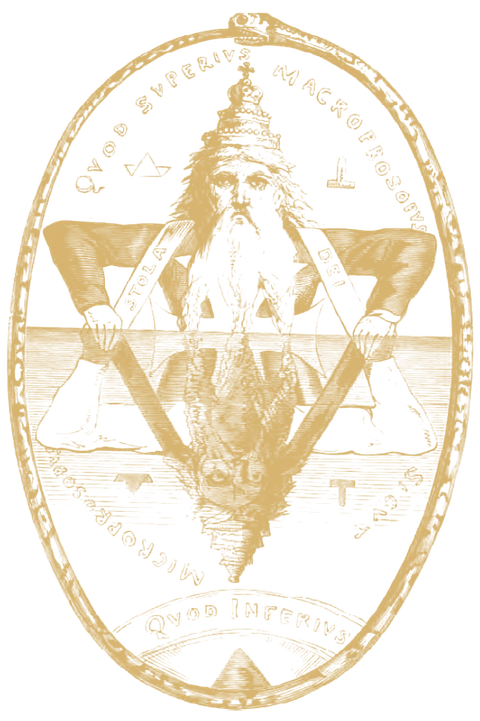
L’analogie est la clef de tous les secrets de la nature et la seule raison d’être de toutes les révélations.
Analogy is the key to all the secrets of nature, and the sole reason for being of all revelations.
The four verbs
To know, to dare, to will, to keep silent
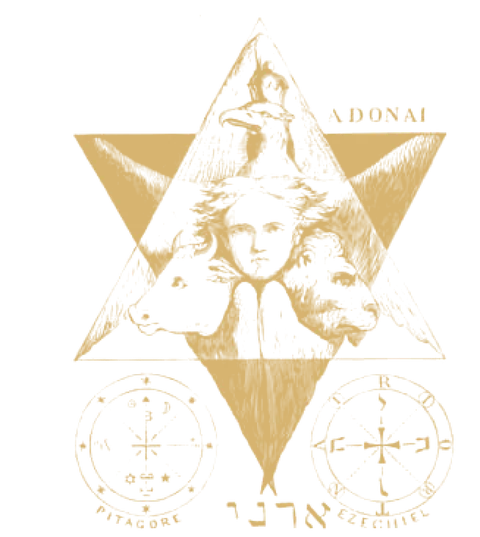
Lévi saw them written in the four forms of the sphinx: the human head, the bull, the lion and the eagle. They are the first lesson of the book, and the first practice in the app.
Savoir
To know
See things as they are, without fear and without wishful thinking.
Oser
To dare
Act on what you know. Knowledge that never acts stays a dream.
Vouloir
To will
Hold your aim steady. What one wills with perseverance, one does.
Se taire
To keep silent
Guard your work. A force spoken too soon is spent.
SAVOIR, OSER, VOULOIR, SE TAIRE, voilà les quatre verbes du mage qui sont écrits dans les quatre formes symboliques du sphinx.
To know, to dare, to will, to keep silent: these are the four verbs of the magus, written in the four symbolic forms of the sphinx.

The numbers
Every number is a law
For Lévi, numbers were not quantities but principles. The layouts of the app are drawn from them.
- 1
Unity
The principle from which everything proceeds: the Magus, Aleph, the first key.
- 2
The Binary
Jakin and Boaz, the two columns of the Temple. Two forces whose balance is life.
- 3
The Ternary
The perfect word: a principle that thinks, one that speaks, and the word spoken.
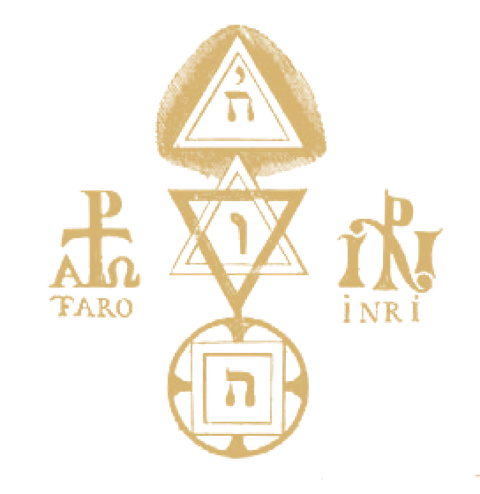 4
The Tetragram
Yod, He, Vau, He: the four steps of every realisation, and the four suits of the deck.
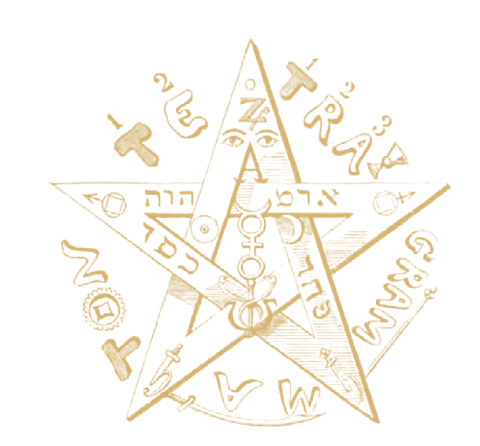 5
The Pentagram
The flaming star: the spirit that governs the four elements, the sign of the human will.
- 7
The Septenary
The seven planets, the seven days, the seven virtues: magical power in all its force.
- 10
The Sephiroth
The ten numbers of the Kabbalah, from the Crown to the Kingdom. They give the pip cards their meaning.
Le verbe parfait, c’est le ternaire, parce qu’il suppose un principe intelligent, un principe parlant et un principe parlé.
The perfect word is the ternary, for it supposes a principle that understands, a principle that speaks, and a principle that is spoken.
The four suits
The Name in four letters
Lévi read the four suits of the Tarot as the four letters of the divine Name, יהוה. Each pip card is one of the ten Sephiroth seen through its suit; each court card, a figure of that suit’s principle.
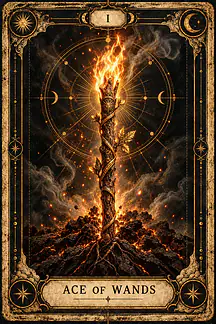
י
Yod
Wands Bâton
The will that begins: the active principle, the spark.
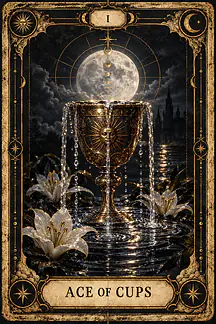
ה
He
Cups Coupe
What receives the will: feeling, love, the fertile vessel.
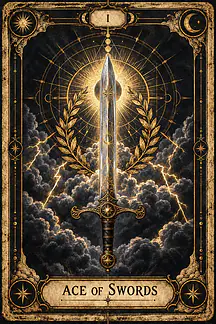
ו
Vau
Swords Épée
The union of the two: movement, struggle, the bond that joins.
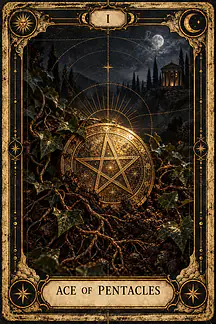
ה
final He
Pentacles Denier
What the work becomes in the world: the body, money, the result.
The Path of 22 Keys
Twenty-two chapters, twenty-two ranks
In the app you rise through the chapters of the Dogme. Each rank is emblemed by the Major Key of the same number, carries Lévi’s Latin keywords, and opens a new page of his Grimoire.
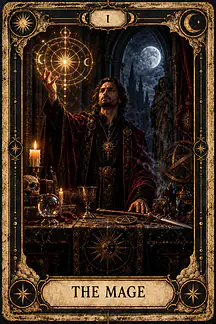
I א Aleph
The Postulant
Le Récipiendaire
DISCIPLINA · ENSOPH · KETER
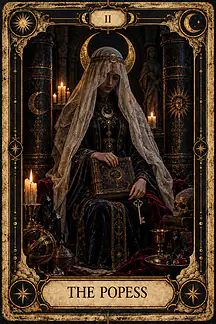
II ב Beth
The Pillars of the Temple
Les Colonnes du Temple
CHOCMAH · DOMUS · GNOSIS
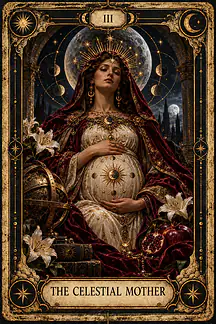
III ג Gimel
The Triangle of Solomon
Le Triangle de Salomon
PLENITUDO VOCIS · BINAH · PHYSIS
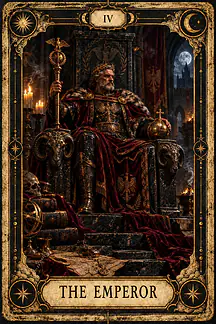
IV ד Daleth
The Tetragram
Le Tétragramme
GEBURAH CHESED · PORTA LIBRORUM · ELEMENTA
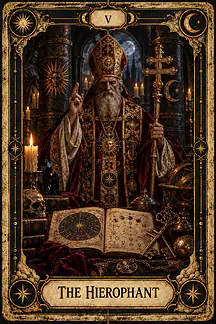
V ה He
The Pentagram
Le Pentagramme
GEBURAH · ECCE
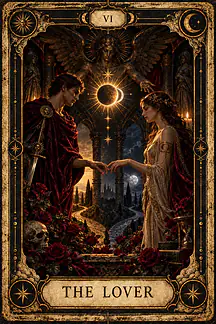
VI ו Vau
The Magical Equilibrium
L'Équilibre magique
TIPHERETH · UNCUS
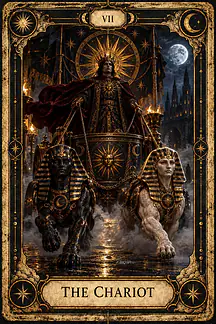
VII ז Zain
The Flaming Sword
L'Épée flamboyante
NETSAH · GLADIUS
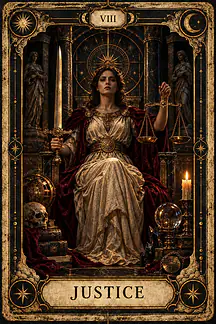
VIII ח Cheth
The Realization
La Réalisation
HOD · VIVENS
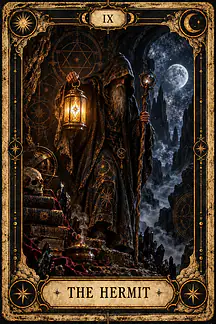
IX ט Teth
The Initiation
L'Initiation
JESOD · BONUM
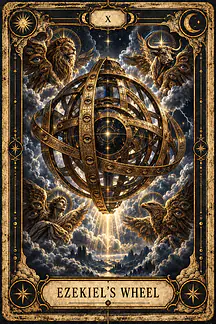
X י Iod
The Kabbalah
La Kabbale
MALCHUT · PRINCIPIUM · PHALLUS
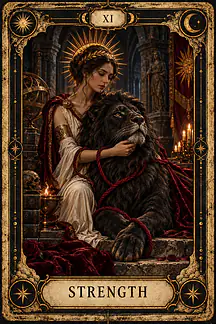
XI כ Caph
The Magic Chain
La Chaîne magique
MANUS
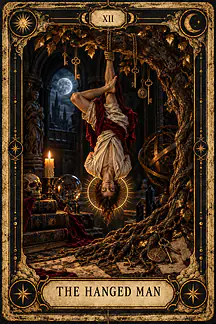
XII ל Lamed
The Great Work
Le Grand Œuvre
DISCITE · CRUX
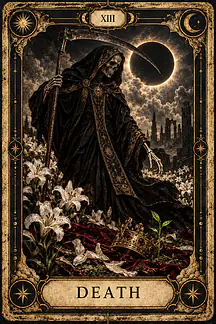
XIII מ Mem
Beyond the Veil
La Nécromancie
EX IPSIS · MORS
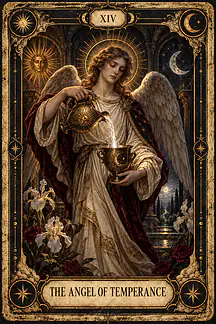
XIV נ Nun
The Transmutations
Les Transmutations
SHERA LUNAE · SEMPITERNUM · AUXILIUM
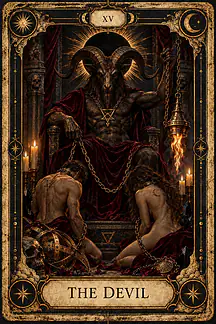
XV ס Samech
The Shadow
La Magie noire
SAMAEL · AUXILIATOR
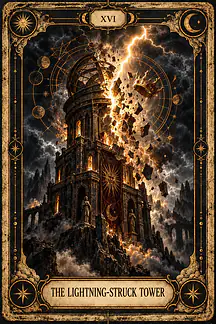
XVI ע Ayin
The Power of the Gaze
Les Envoûtements
FONS · OCULUS · FULGUR
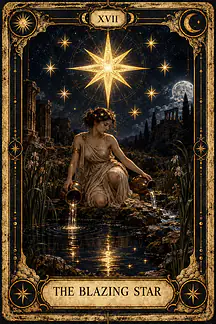
XVII פ Pe
The Astrology
L'Astrologie
STELLA · OS · INFLEXUS
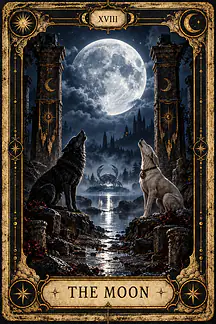
XVIII צ Tsade
The Enchantments
Les Philtres et les Sorts
JUSTITIA · MYSTERIUM · CANES
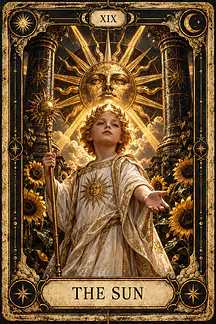
XIX ק Qoph
The Philosophers' Stone
La Pierre des Philosophes
VOCATIO · SOL · AURUM
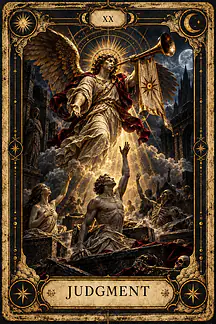
XX ר Resh
The Universal Medicine
La Médecine universelle
CAPUT · RESURRECTIO · CIRCULUS
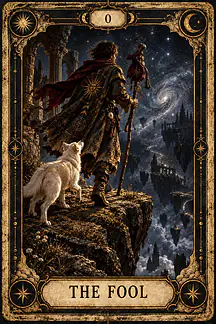
XXI ש Shin
The Divination
La Divination
DENTES · FURCA · AMENS
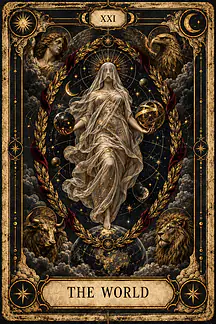
XXII ת Tau
The Veiled Key
La Clef générale
SIGNA · THOT · PAN
How the Oracle reads
One book, read closely
Behind the Oracle stands a codex of all 78 cards, compiled from Lévi’s text: each card’s principle, its hieroglyph, how it acts upright, blocked or turned inward, and how it changes in each place of a layout, with Lévi’s own words and page numbers. Every quotation is verified against the book by a script, page by page.
When you ask, the Oracle reads your cards, in their places, through that codex alone. No modern card dictionary, no borrowed meanings.
About the Oracle (AI)The Rituel
Practices of attention and will
Drawn from both halves of the book, six guided practices open as you walk the Path. They are exercises for the mind: no substances, and nothing aimed at another person.
Rank I · 5 min
The Preparation
Prove an intention by an act, today.
« Toute intention qui ne se manifeste pas par des actes est une intention vaine »
Rituel I, Les préparations, p. 238
Rank II · 6 min
The Four Verbs
To know, to dare, to will, to keep silent.
« SAVOIR, OSER, VOULOIR, SE TAIRE, voilà les quatre verbes du mage »
Dogme I, Le récipiendaire, p. 67
Rank III · 5 min
The Equilibrium
Life is in the alternation of two forces.
« L’équilibre est la résultante de deux forces. »
Rituel II, L’équilibre magique, p. 247
Rank V · 8 min
The Pentagram
The spirit governing the four elements.
« Nous arrivons à l’explication et à la consécration du saint et mystérieux pentagramme. »
Rituel V, Le pentagramme flamboyant, p. 272
Rank VII · 5 min
The Chain
To give birth to a current of ideas.
« Former la chaîne magnétique, c’est faire naître un courant d’idées »
Rituel XI, La triple chaîne, p. 310
Rank XII · 7 min
The Great Work
The creation of oneself by oneself.
« Le grand œuvre, c’est, avant toute chose, la création de l’homme par lui-même »
Dogme XII, Le grand œuvre, p. 151
The door is ajar
Ask your question. Choose your cards. Listen.
 Coming soonApp Store
The Veiled Key is now on Google Play. The App Store follows soon.